EDGE
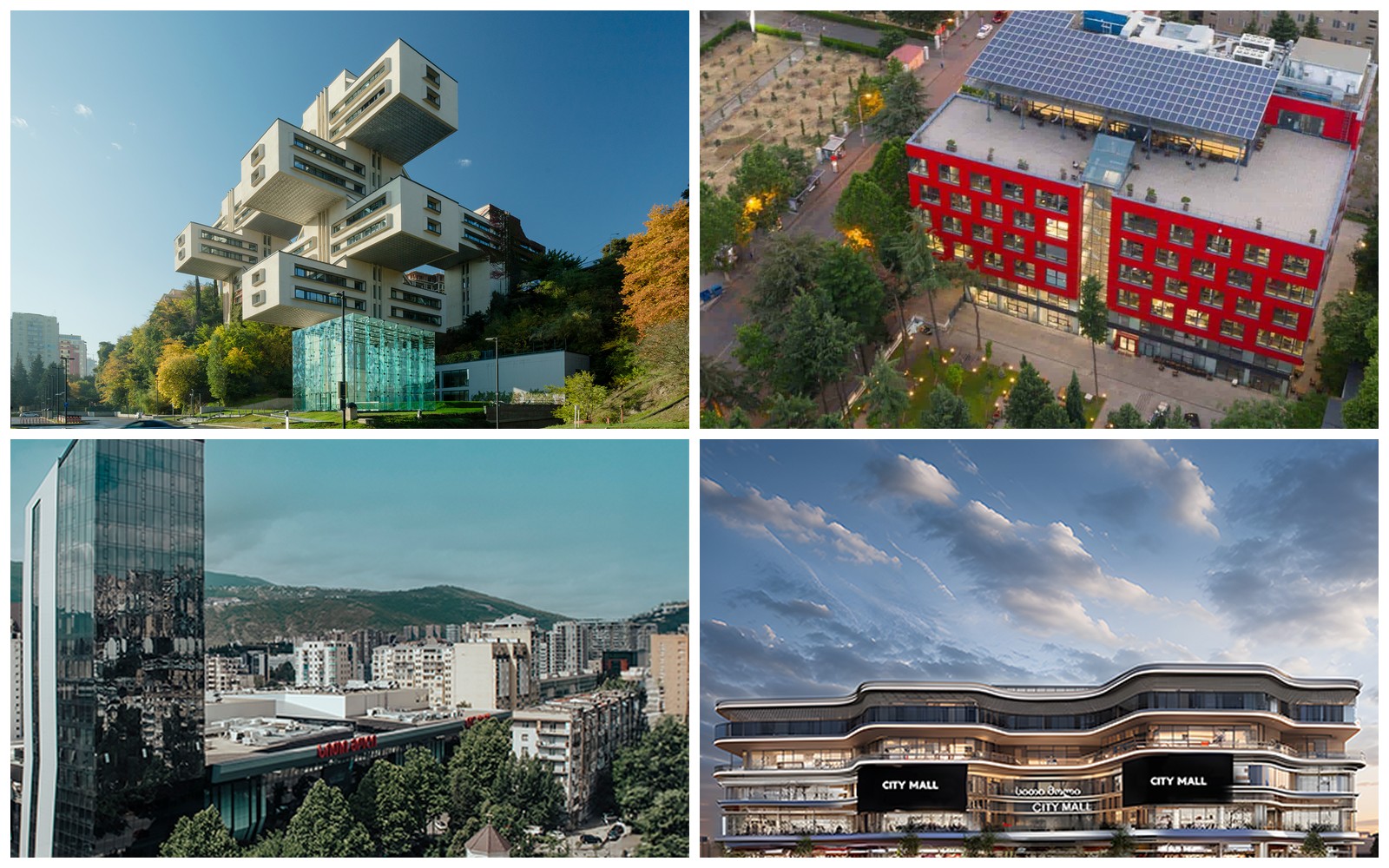
- ProCredit Bank Georgia – Head Office, Tbilisi. Office building, roughly 9,650 m² (21 Al. Kazbegi Avenue). The first EDGE-certified building in Georgia, achieving final certification in December 2020. The headquarters was originally built in 2008–09 and occupied from 2013; certification followed a sustained retrofit programme, LED lighting, rainwater harvesting and a rooftop solar array (around 100 kW) used partly to charge the bank’s electric-vehicle fleet, layered onto an already efficient envelope. The bank has stated an intention to pursue higher EDGE tiers toward Zero Carbon.
- Bank of Georgia – Head Office, Tbilisi. Office building at 29a Gagarin Street. The former Ministry of Highway Construction of the Georgian SSR, designed by George Chakhava and Zurab Jalaghania and completed in 1975, built on the “Space City” principle of lifting the structure off the ground to let nature grow beneath it. An 18-storey building of roughly 16,000 m² and a designated Cultural Heritage Monument of Georgia, its appearance on the EDGE register is a striking example of resource-efficiency certification reaching a heritage-listed Soviet-era icon rather than only new construction.
- City Mall Saburtalo, Tbilisi. Retail. The largest shopping mall in Georgia, on Vazha-Pshavela Avenue, with 300-plus stores; in operation since 2010 and significantly expanded in 2019. Its certification marks EDGE reaching the large-format retail sector, where cooling, lighting and ventilation loads make efficiency gains especially material.
- City Tower Saburtalo, Tbilisi. Mixed-use commercial tower on Vazha-Pshavela Avenue, developed as part of the same City Mall Saburtalo complex (its “City Tower” phase). Its certification extends the operator’s EDGE footprint from the horizontal mall floorplates to a vertical office-and-commercial tower on the same site.
- City Mall Gldani, Tbilisi. Retail. The group’s second mall, in the Gldani/Avchala area in the north of the city, anchored by a Carrefour hypermarket. Like its Saburtalo sibling, it demonstrates the retail operator applying the same efficiency standard across its portfolio.
LEED
- Ajara Textile, Poti. A textile manufacturing facility in the Black Sea port city of Poti, in the Adjara group’s Georgian portfolio, listed on the USGBC project register, a rare example of certification reaching the industrial sector rather than offices or housing.
- Cityzen Tower, Tbilisi (targeting LEED Gold). A 42-storey mixed-use tower by Zaha Hadid Architects in Saburtalo, near Tbilisi’s new Central Park. Designed to a LEED Gold target rather than yet certified; included here because it is the country’s most prominent LEED-oriented project and signals where the market is heading.
The real engine: green finance
A green certificate is not a claim a developer makes about itself; it is an independent, internationally comparable verdict on how a building is designed and how it performs. In Georgia, as in Armenia, that verdict has done several things at once. It has lowered operating costs and environmental impact over a building’s life. It has connected local real estate to international green finance, the IFC and EBRD lending, and the ESG-driven investors who follow those institutions. And in a seismically active region, the discipline of building to an international standard tends to travel alongside a broader commitment to quality and resilience.