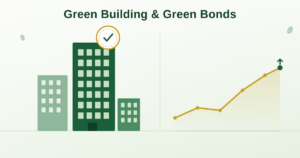
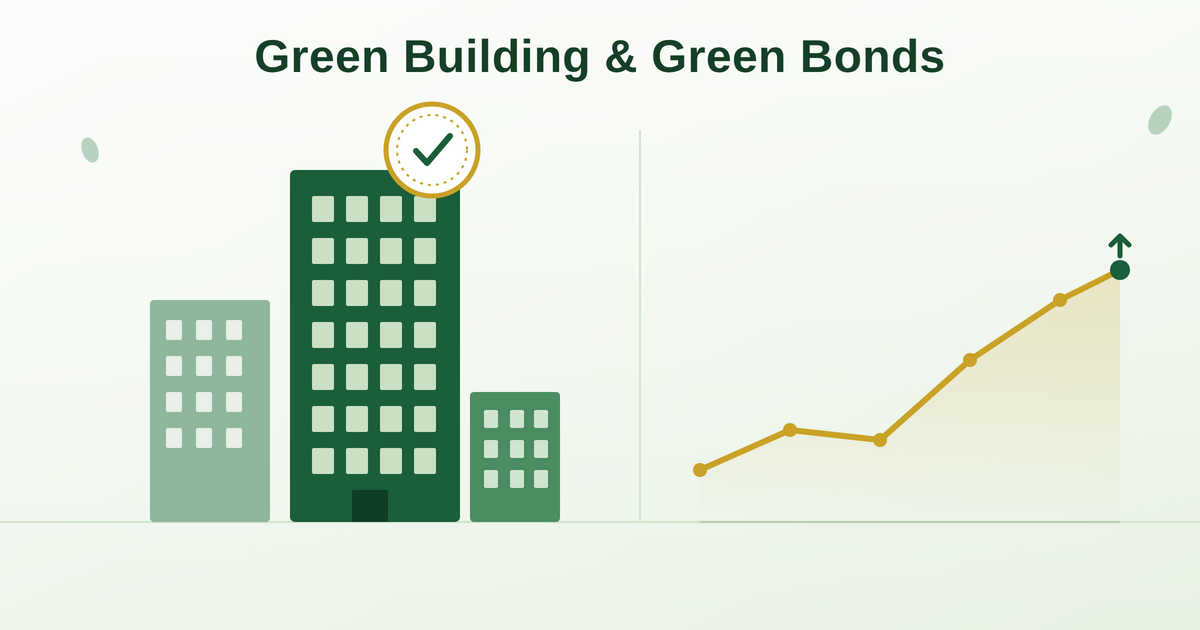
Green buildings have historically been one of the largest use-of-proceeds categories in the green bond market: roughly $66 billion, or about 28% of total green bond issuance, went to green buildings in 2019 alone, according to Environmental Finance. Real-estate-specific labeled bonds peaked at $86.4 billion in 2021, per CRREM, before settling to a smaller share of a much larger overall sustainable-debt market, a sign that buildings now compete with renewables, transport and other categories for green capital, not that the opportunity has shrunk.
The rationale is straightforward: buildings account for roughly 40% of global energy-related carbon emissions, so a green bond market serious about climate impact has to be a buildings market too.
EDGE and the emerging-market pathway
For markets like Armenia’s IFC’s EDGE certification, now present in Yerevan and Dilijan; gives developers in emerging markets a faster, lower-cost route to the same kind of independent verification that global lenders and green bond investors look for, which is precisely why it has spread fastest in exactly the kind of market Armenia represents: one where certified stock is still small but growing quickly.
Armenia’s nascent bond market, meeting an early-stage certified stock
Armenia’s own sustainable bond market remains, in the Central Bank’s own words, “in its early stages of development.” Since November 2020, four issuers have brought green or sustainability-linked bonds to market: Ameriabank (€42 million, $8 million and AMD 3 billion), Telcell Armenia ($45 million and $20 million in sustainability-linked bonds, plus AMD 3.9 billion), National Mortgage Company ($26 million — and the first Armenian issuer to bring a Eurobond fully compliant with ICMA’s Green Bond Principles), and Electric Networks of Armenia ($30 million across two issues). Coupons have ranged from 3.05% to 11.5%.
Alongside this, EBRD’s Green Economy Financing Facility and the EU4Climate initiative have channelled roughly $100 million through Armenian commercial banks into energy-efficiency and renewable-energy lending over the past five years — yet the Central Bank’s own assessment notes that Armenia’s banking sector still “significantly under-utilizes” the potential of green finance.
Armenia’s small but growing base of LEED, BREEAM and EDGE-certified properties is now positioned to fill.
What it means for developers, banks and policymakers
- Developers: Certification earned today becomes financeable collateral tomorrow. As Armenian banks build out green bond and green loan frameworks, a LEED, BREEAM or EDGE certificate is what will let a specific building qualify for that pool of capital rather than conventional debt.
- Banks and issuers: Frameworks that name specific certification thresholds, as Berlin Hyp and other European issuers already do, give Armenian institutions a ready template for building bond and loan products that plug directly into existing certified stock, without inventing local criteria from scratch.
- Policymakers: The Central Bank of Armenia’s sustainable finance work is the natural place to formalize this link writing recognized building certifications into national green taxonomy or bond-readiness guidance would give issuers and investors a clear, internationally credible standard to build around.
The bottom line
Green bonds and green building certification are increasingly two halves of the same mechanism: one measures a building’s performance, the other prices that performance into the cost of capital. As Armenia’s certified building stock grows and its bond market matures past its early stage, Green Growth Alliance would support both movements.