As cities become denser, biodiversity must become part of the urban fabric, not something limited to parks or rural landscapes.
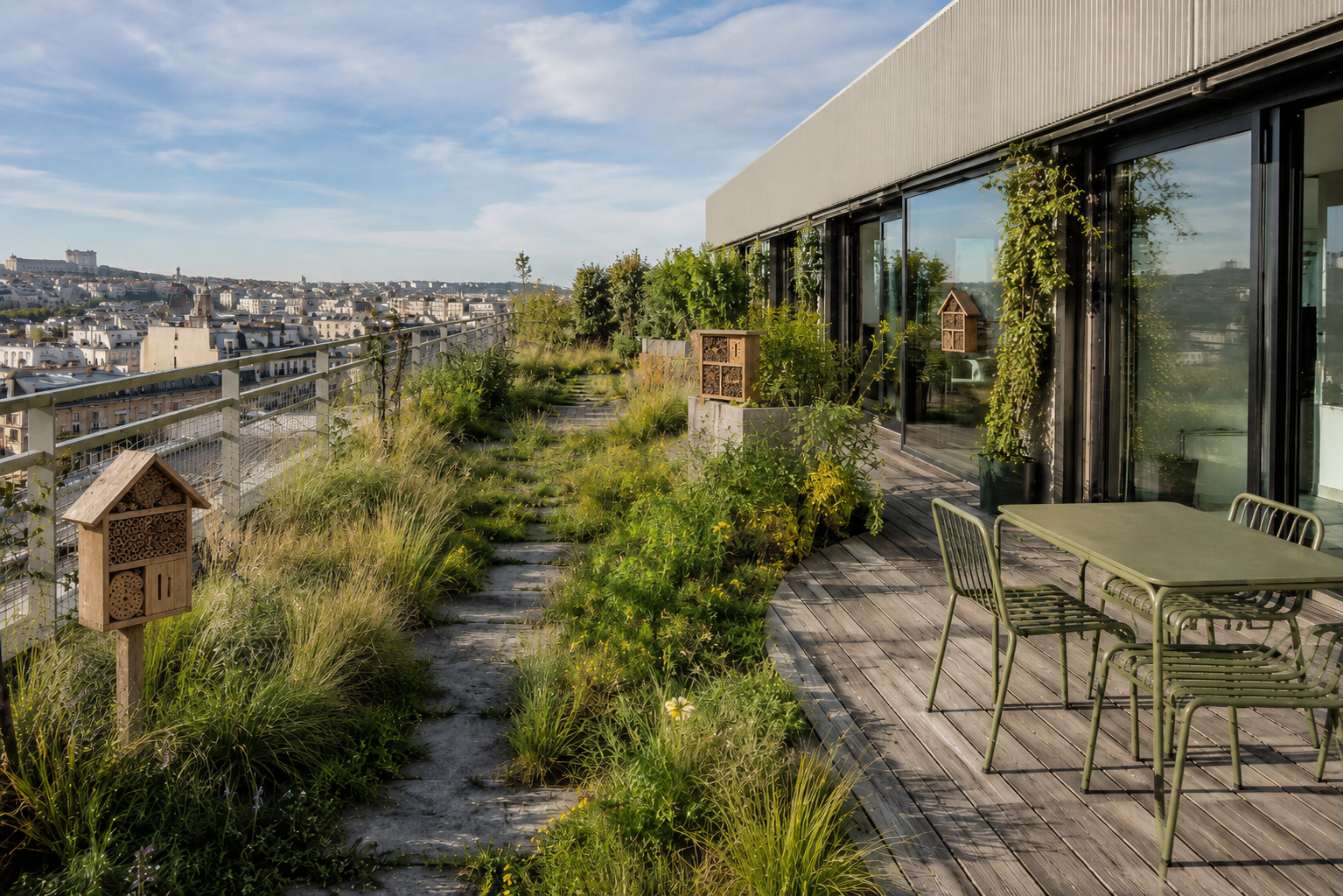
Green roofs, planted terraces, pocket parks, rain gardens, bioswales, street trees, bird nesting spaces, insect habitats, and ecological corridors show how architecture and urban design can support living systems inside the city. These elements provide habitat, reduce heat, manage stormwater, clean the air, support pollinators, and improve quality of life.
A biodiverse city is also a more resilient city. Vegetation cools streets and buildings, absorbs rainfall, reduces flood risk, and creates healthier microclimates. It also reconnects people with nature in everyday spaces: rooftops, balconies, courtyards, streets, and public areas.
Projects such as VIGUIER’s FLUX in Paris and BRIDGE in Issy-les-Moulineaux demonstrate how buildings can act as ecological infrastructure through planted rooftops, green balconies, landscaped atriums, nesting boxes, and insect hotels.
The future of urban design should be nature-positive: creating spaces where people, plants, birds, insects, and ecosystems can coexist and thrive.
#UrbanBiodiversity#SustainableArchitecture#GreenCities#UrbanDesign#LandscapeArchitecture#ClimateResilience#NaturePositiveDesign

How green building standards could unlock green bond financing in Armenia
Green buildings have historically been one of the largest use-of-proceeds categories in the green bond